

16 October 2023 – Silicon Quantum Computing (SQC) CEO Michelle Simmons thanked UNSW and praised the work of her team as she was awarded the 2023 Prime Minister’s Prize for Science for achievements in the field of atomic electronics.
Announced by the Prime Minister of Australia, the Hon Anthony Albanese MP, and Minister for Industry and Science the Hon Ed Husic MP, the annual awards celebrate contributions to science across an array of specialist fields.
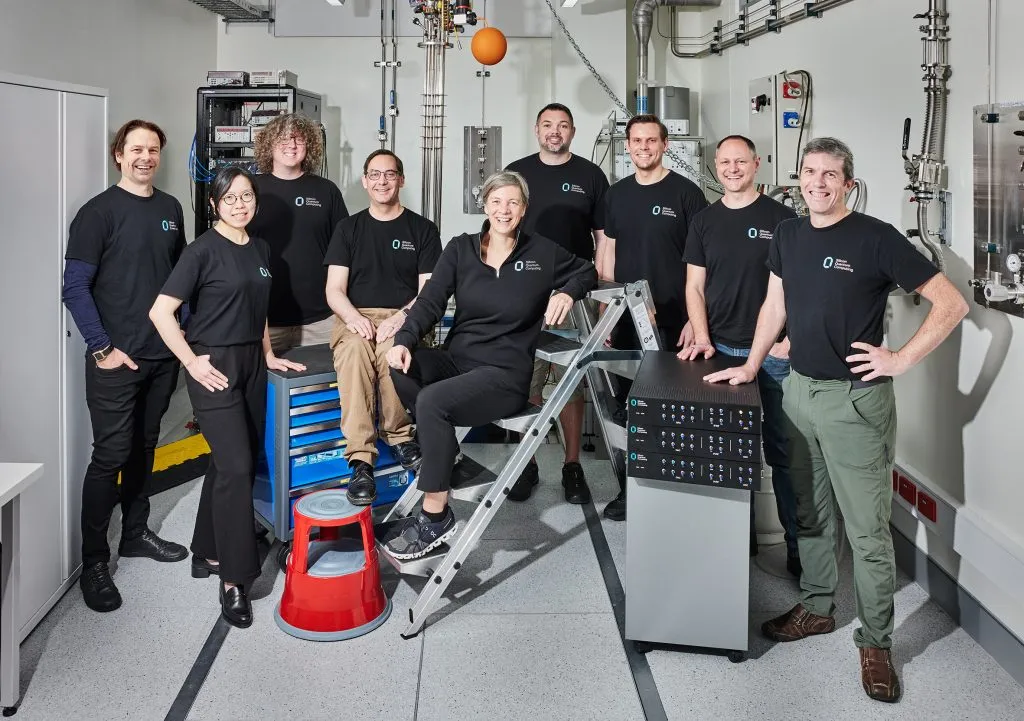
“Having our nation’s leaders honour our work at SQC and UNSW spurs me and my team on with our mission. From right here in Australia, our team of physicists, engineers and computer scientists are on track to create, manufacture and commercialise the world’s first error-corrected quantum computer based on integrated circuits made with atomic precision,” said Michelle Simmons.
“I have been humbled throughout my career to receive generous support from the Australian public, government and corporations, who are all helping to bring the new quantum age of computing a reality for this generation, and many beyond. I couldn’t be more honoured to accept this award with all of them in mind,” Simmons continued.
Alongside her work as Founder and CEO of SQC, Professor Simmons is also Director of the Australian Research Council (ARC) Centre of Excellence for Quantum Computation and Communication Technology at UNSW Sydney. The Australian Department of Industry, Science and Resources explains more in this video created to mark this year’s Prime Minister’s Prize for Science winner.

Pictured left to right: Sam Gorman, Michelle Simmons, Joris Keizer, Yousun Chung from SQC
Former Telstra Chief Scientist and Emeritus Professor of Electrical Engineering Hugh Bradlow described the importance of the work acknowledged in this year’s Prime Minister’s Prize for Science as “so much more than just quantum computing.”
“It’s of nation-building significance because it provides the foundations for a significant component of the new Australian National Quantum Strategy. These are uniquely imaginative scientific achievements, enabled by brilliant, long-term scientific work, the impact of which will reach into many parts of our world for many decades to come,” Prof. Bradlow said.
/ Stay Updated ON DISCOVERIES AND ACHIEVEMENTS
Keep in touch
We continually publish achievements and results with transparency. Hear from SQC on our journey to a million qubits and beyond.
